Booking choice: The Tirana highlights walk, ★ 4.8 (1,436). Check dates Compare the options below
Tirana is a young capital with a long memory. In a few streets you pass an Ottoman mosque, Italian-era ministries, communist bunkers, a pyramid built for a dictator and cafés in the district where the old elite once lived behind guarded gates.
This guide goes through the sights one by one: what they are, whether they need a ticket, how long to allow and which walking tour covers them. To fit them into your stay, see how many days in Tirana. For the trips out of the city, see day trips from Tirana compared.
The quick answer
No ticket needed: Skanderbeg Square, the Pyramid steps, Postbllok, Blloku, the New Bazaar, the castle lane, Tanners' Bridge and the Grand Park lake. Small fee at the door: Bunk'Art 1, Bunk'Art 2, the House of Leaves and the Clock Tower. Closed: the National History Museum, until a planned reopening in March 2028; its big mosaic is still on view from the square. New: the Great Mosque of Tirana, opened 10 October 2024. Mosques: shoulders and knees covered, shoes off, women cover their hair, visit outside prayer times. Mount Dajti: the cable car does not run on Tuesdays. Guided walks: 2 to 2.5 hours, and they show most sights from outside. Cancellation: full refund if you cancel up to 24 hours ahead on every tour listed here.
What are the main sights in Tirana?
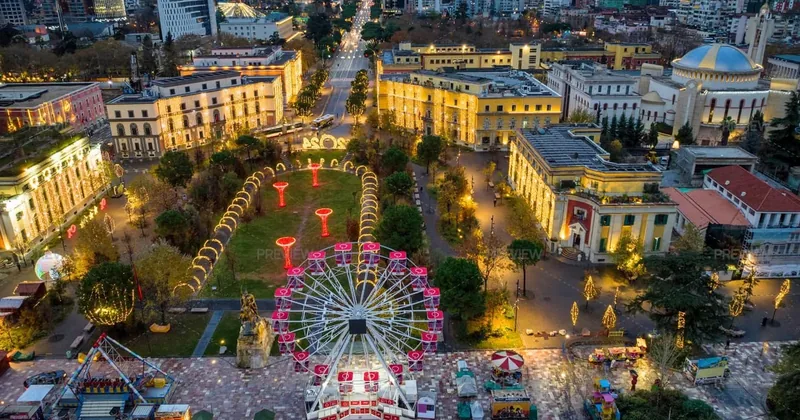
Skanderbeg Square with the Et'hem Bey Mosque and the Clock Tower, the bunker museums, the House of Leaves, the Pyramid, Postbllok and Blloku, the New Bazaar, the castle lane, the Great Mosque and the Grand Park lake. Mount Dajti rises above the city.
- Skanderbeg Square: the huge, open main square, pedestrianised in 2017, with the equestrian statue of Albania's national hero. No ticket needed.
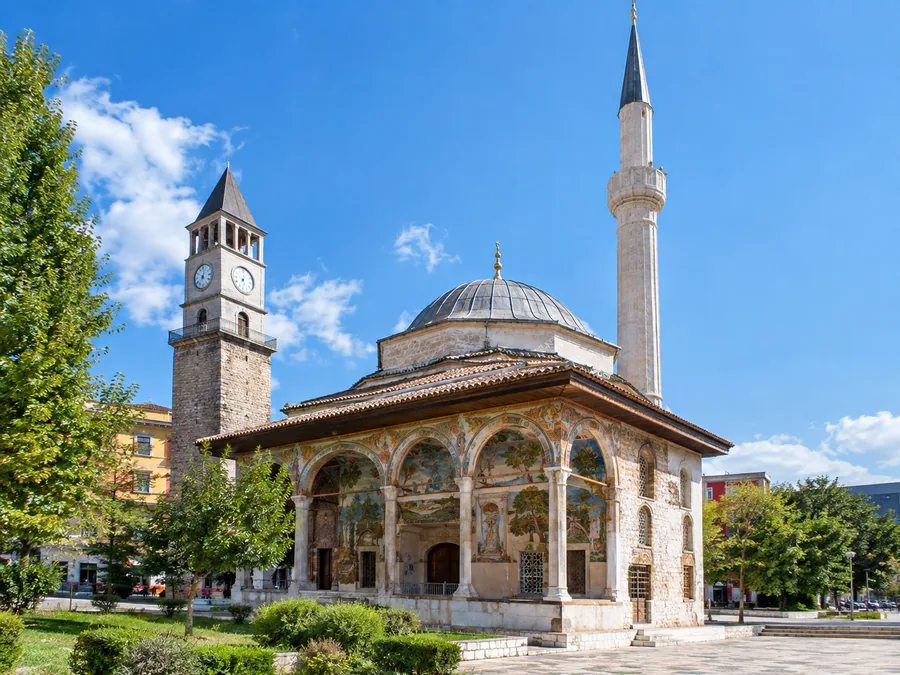
- The Et'hem Bey Mosque: a small mosque on the square, completed in 1821, with painted walls inside and out. Visit outside prayer times.
- The Clock Tower: beside the mosque, from the early 19th century. You climb about 90 steps for the view; a small fee, and the hours vary.
- The House of Leaves: the former headquarters of the secret police, now the Museum of Secret Surveillance. A small fee; open daily in season, so check winter days before a Monday visit.
- The Resurrection Cathedral: the large Orthodox cathedral, opened in 2012, near the square.
- Further out: the Grand Park lake, a short walk south of the centre, and Mount Dajti by cable car on the eastern edge of the city.
Is Tirana worth a visit in 2026?
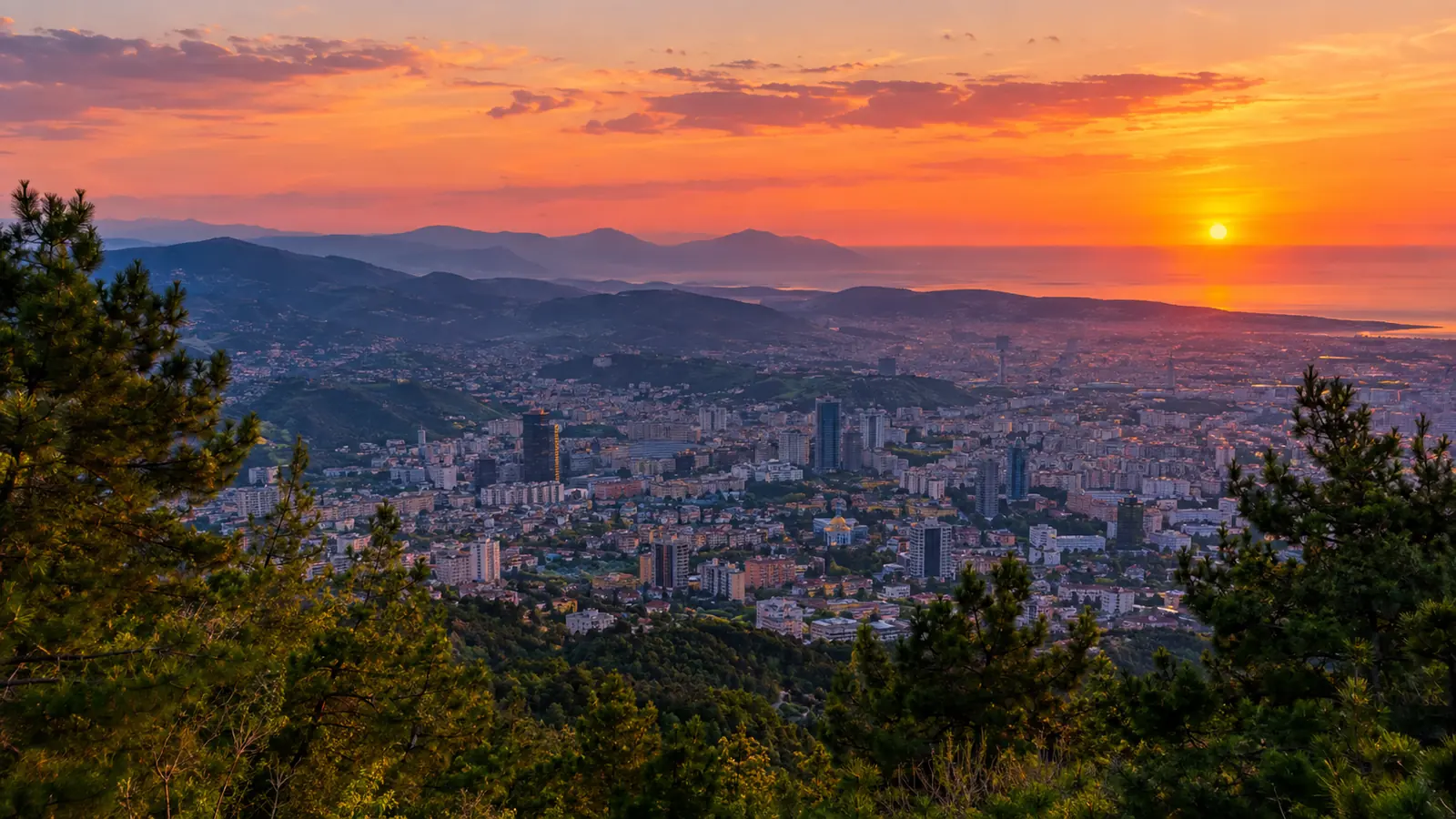
Yes. Tirana is lively, safe and easy to walk, and it tells the story of Albania's communist years better than anywhere else. It is also the best base for day trips to Berat, Kruja and the mountains.
The centre is compact: most sights are a short walk from Skanderbeg Square. Visitors walk around day and night, cafés fill the pavements, and the city keeps changing, with new buildings next to Ottoman and Italian-era ones. The main thing to watch is traffic, so cross with care.
One or two days in the city is enough for most people, followed by day trips. A guided walk on your first morning gives you the background. The Tirana Highlights and Hidden Corners Walk (4.8 from 1,436 reviews) takes 2 hours from the Clock Tower, and reviewers praise the guides' humour, history and food tips.
Two easy hours on foot from the Clock Tower in a small group: Skanderbeg Square, the House of Leaves, the Orthodox cathedral, Youth Park and the Pyramid.
Check dates for the Tirana highlights walkWhich Tirana sights have changed since 2024?
The National History Museum closed on 15 March 2024 for a full rebuild and is planned to reopen in March 2028. The Great Mosque opened on 10 October 2024, and the Pyramid reopened in 2023 as a tech centre with steps you can climb.
The National History Museum is the large building on the north side of Skanderbeg Square. It is closed for reconstruction, so no tour goes inside, but its giant facade mosaic, The Albanians, is still on view from the square. Walking tours stop outside to explain it.
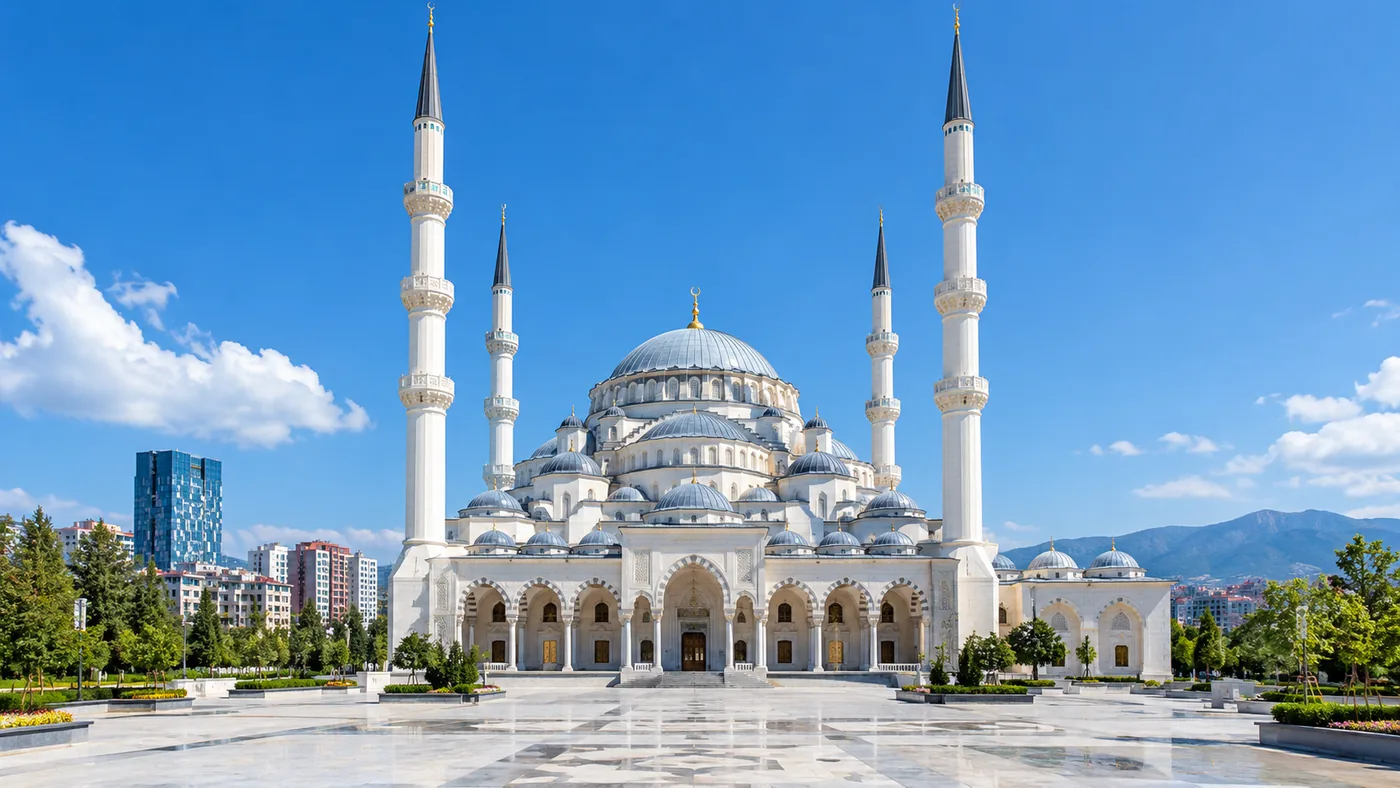
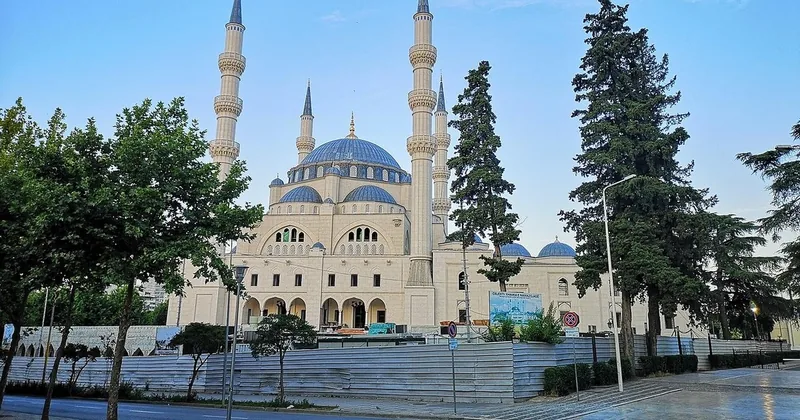
The Great Mosque of Tirana, also called the Namazgah Mosque, stands next to the Parliament. It is the largest mosque in the Balkans, with four slender minarets around a central dome, and the plaza in front is open to everyone. Dress as you would for any mosque: shoulders and knees covered, shoes off, women cover their hair, and visit outside prayer times. Tanners' Bridge, an 18th-century Ottoman stone footbridge, is a short walk away.
Bunk'Art 1 or Bunk'Art 2: which bunker museum should you visit?
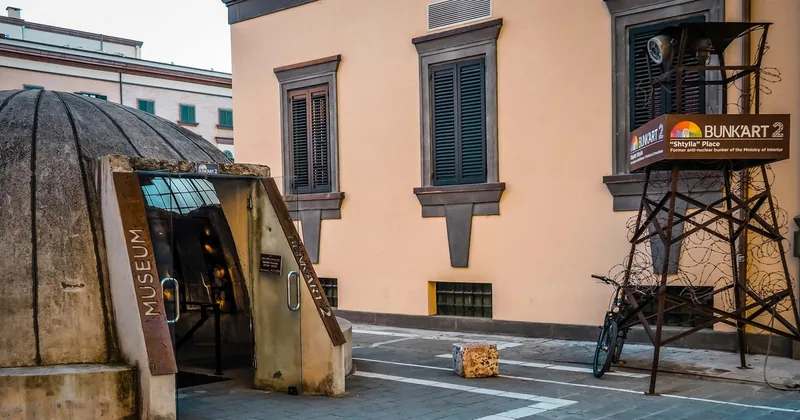
Bunk'Art 2 if you have little time: it is a few minutes from Skanderbeg Square. Bunk'Art 1 if you want the full experience: a huge leadership bunker on the edge of the city, next to the Dajti cable car.
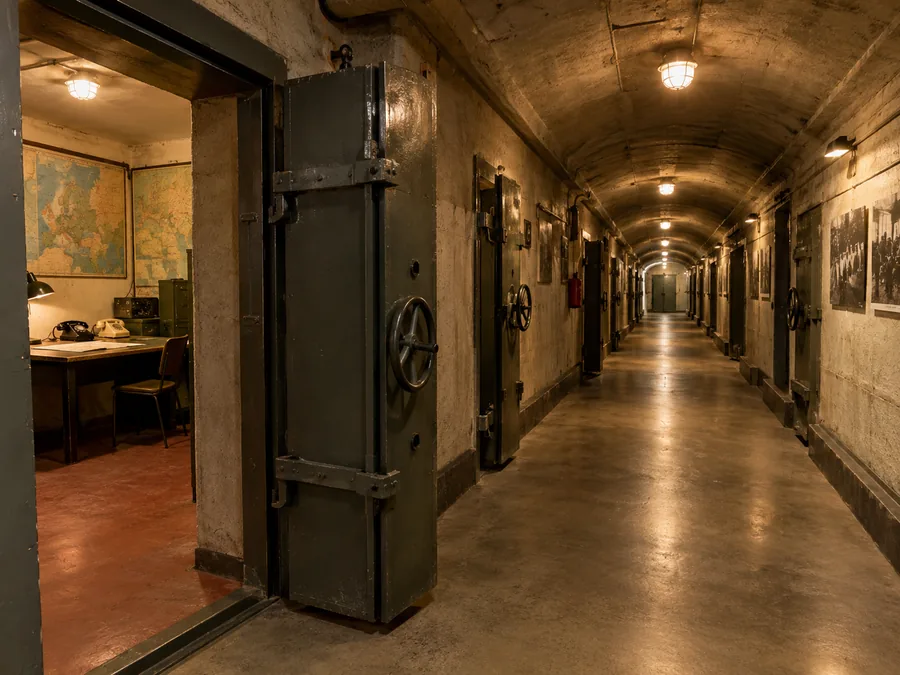
Bunk'Art 2 is a former Interior Ministry bunker on Rruga Abdi Toptani, opposite the Municipality. It is now a museum, open daily from 9:30 am to 6:30 pm. Bunk'Art 1 is a nuclear bunker built for the communist leadership: five floors underground, with its own cinema hall. It is behind the lower station of the Dajti cable car and opens daily, closing earlier in winter. Both charge a small fee at the door, and the Bunk'Art website lists the current hours.
Bunk'Art 1 is easy to combine with the cable car on the same afternoon. If you would like a guide inside, the guided visit with an online ticket takes 2 to 3 hours, with transport as an option. It has a lower rating than the other tours here and only a few reviews (4.4 from 64), so read them before you book.
Can you climb the Pyramid of Tirana?
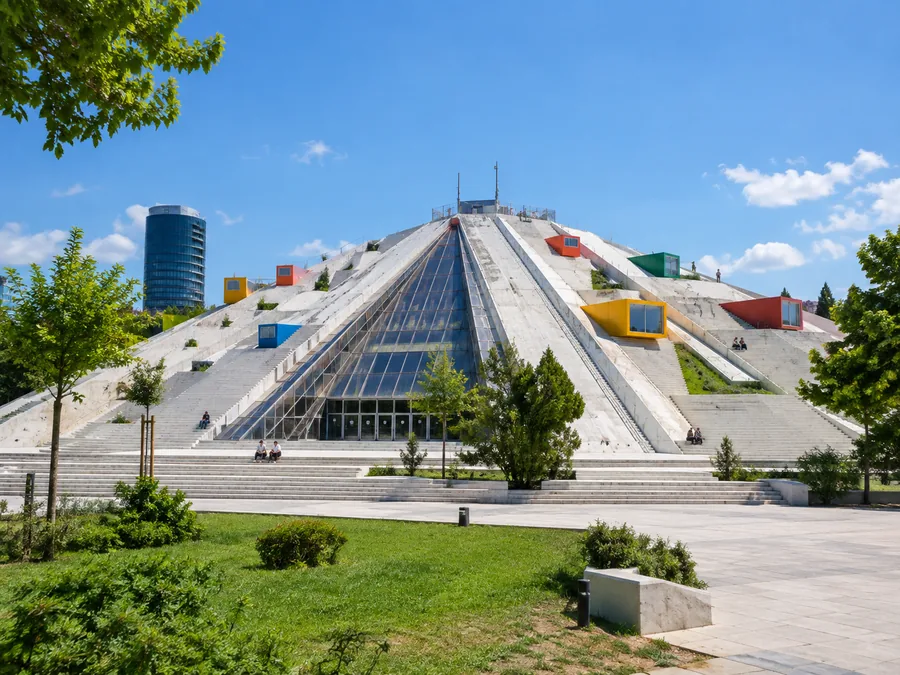
Yes. The Pyramid was rebuilt and reopened in 2023, with white steps up its sides that anyone can climb at any hour. Inside it is now a tech centre for young people.
The Pyramid was built in 1988 as a museum to Enver Hoxha, the communist dictator. After years of neglect it was rebuilt. Today the steps lead to a view over the boulevard, and the building houses the TUMO tech centre for young people.
Postbllok, a few minutes south along the boulevard, is an open-air memorial with a bunker, concrete supports from the Spac labour camp and a piece of the Berlin Wall. Behind it starts Blloku, the district once closed to ordinary Albanians, where the communist elite lived. It is now full of cafés and bars, and Hoxha's former villa still stands there. The communist past small-group walk (4.9 from 192 reviews) links all three in 2 hours.
The communist years on foot in a small group: the Postbllok memorial with a piece of the Berlin Wall, Blloku and Hoxha's former villa, the Pyramid and the bunkers. Rated 4.9 from 192 reviews.
Explore the communist past walkWhat are some curiosities about Tirana?
Tirana was founded in 1614, became the capital in 1920, has more than 170,000 bunkers across the country around it, and owes its brightly painted apartment blocks to a mayor who was also an artist.
- A mosque, a bakery and a hammam: Sulejman Pasha Bargjini founded Tirana in 1614 with these three buildings.
- A young capital: the Congress of Lushnje chose Tirana as the capital in 1920. Today about 600,000 people live in the municipality.
- Bunkers everywhere: under communism Albania built more than 170,000 bunkers. You still see small concrete domes in parks and fields.
- Painted facades: Edi Rama, mayor from 2000 to 2011 and an artist, had grey apartment blocks painted in bright colours and stripes.
- A closed district: Blloku, now the liveliest café quarter, was closed to ordinary Albanians under communism.
- Mother Teresa: the airport at Rinas is named after her, as Nënë Tereza. She was of Albanian heritage.
A licensed guide in English, French or Italian, morning or early evening: the square, the mosque, Bunk'Art 2, the castle lane, the Pyramid and Blloku.
Check dates for the walking tour in English, French or ItalianWhere can you find old Tirana and some quiet green space?
Old Tirana is in the castle lane, the New Bazaar and Tanners' Bridge. For green space, walk to the Grand Park lake south of the centre, or take the cable car up Mount Dajti.
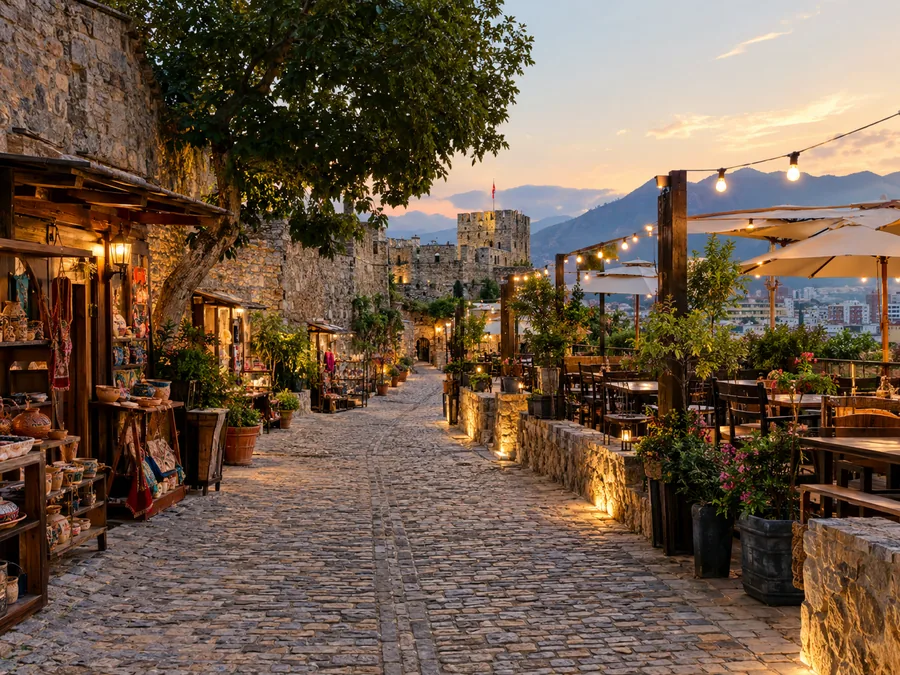
Tirana Castle is a short stretch of old walls off the Murat Toptani promenade. Since 2018 a pedestrian lane inside them has held restaurants and craft shops; it is always open and needs no ticket. The New Bazaar, built in 1931 and renovated in 2017, has covered halls of fruit, vegetables, cheese and honey, with cafés around them. More on its food is in the guide to Albanian food.
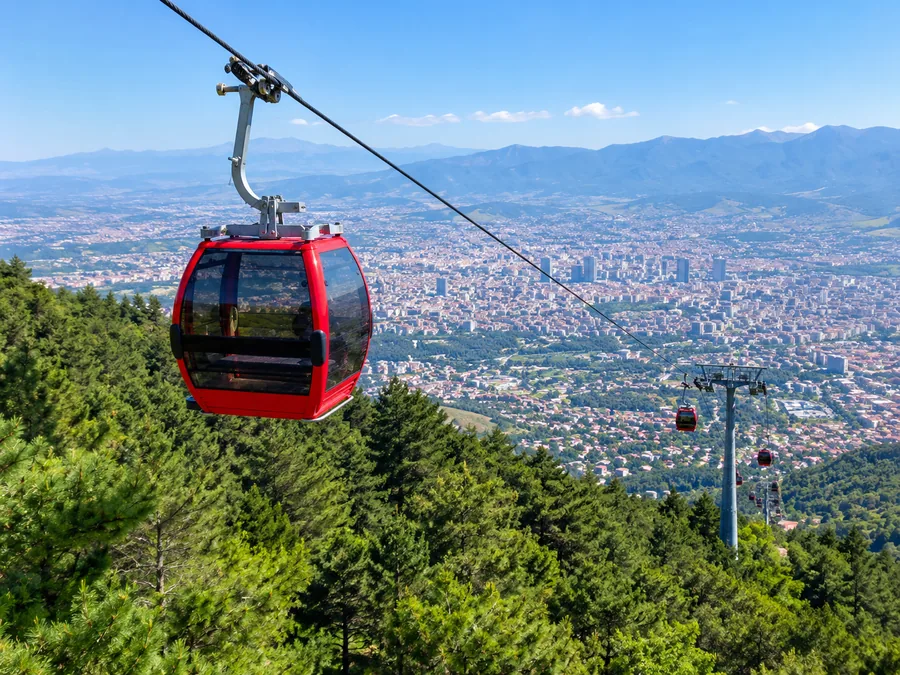
The Grand Park lake dates from 1955, and a loop walk around it is popular with families at the weekend. The bike or e-bike tour (4.9 from 139 reviews) covers the New Bazaar, Blloku and the lake in 3 hours. Mount Dajti, above the city, is reached by the Dajti Ekspres cable car: about 15 minutes, more than 4 km long, to over 1,000 m. It does not run on Tuesdays, unless a Tuesday is a public holiday. The half day with the cable car ticket (4.6 from 81 reviews) gives you return transport, the ticket and three hours on the mountain.
Which Tirana walking tour covers which sights?
The highlights walk covers the square, the House of Leaves and the Pyramid. The longer walk in three languages adds the castle, Bunk'Art 2 from outside and Blloku. The communist past walk focuses on Postbllok, Blloku and the bunkers.
The walks take 2 to 2.5 hours and show most sights from outside, so plan extra time if you want to go inside a museum. Tip-based walking tours also leave Skanderbeg Square every day, in front of the Opera, for about 2 hours in English. Every tour is set side by side on the homepage. Check the cable car's days on the Dajti Ekspres page.
| Sight | Ticket? | Time needed | On which walk |
|---|---|---|---|
| Skanderbeg Square and statue | No ticket needed | 20 minutes | All three walks |
| Et'hem Bey Mosque and Clock Tower | Mosque: no ticket; tower: small fee | 30 minutes | Highlights walk, walk in three languages |
| National History Museum | Closed until 2028 | 5 minutes for the mosaic | Walk in three languages (outside) |
| Bunk'Art 2 | Small fee | 1 to 1.5 hours | Walk in three languages (outside) |
| House of Leaves | Small fee | 1 hour | Highlights walk |
| The Pyramid | No ticket needed for the steps | 20 minutes | All three walks |
| Postbllok and Blloku | No ticket needed | 1 hour | Communist past walk; Blloku also on the walk in three languages |
| Castle lane and New Bazaar | No ticket needed | 1 hour | Castle: walk in three languages; bazaar: bike tour |
| Great Mosque and Tanners' Bridge | No ticket needed | 30 minutes | On your own |
| Mount Dajti and Bunk'Art 1 | Cable car ticket; small fee for Bunk'Art 1 | Half a day | Dajti tours; not on Tuesdays |
Two and a half hours with a licensed guide in English, French or Italian: Skanderbeg Square, the Et'hem Bey Mosque, Bunk'Art 2, the castle, two cathedrals, the Pyramid and Blloku. Rated 4.9 from 1,128 reviews.
Explore the walking tour in English, French or ItalianFrequently asked questions
Is the National History Museum in Tirana open?
No. It closed on 15 March 2024 for a full rebuild, with reopening planned for March 2028. Its big facade mosaic is still on view from Skanderbeg Square.
Which sights in Tirana need no ticket?
Skanderbeg Square, the Pyramid steps, Postbllok, Blloku, the New Bazaar, the castle lane, Tanners' Bridge and the Grand Park are open to everyone.
Can you visit the Great Mosque of Tirana?
Yes, outside prayer times. Cover your shoulders and knees, take off your shoes, and women cover their hair.
Do I need a tour to see Tirana?
No. The centre is compact and easy to walk. A guided walk adds the history and the stories in about 2 hours.
Ready to book
Choose your tour
Check your date and the live price on GetYourGuide; the refund terms are shown on each option.
Tirana Highlights and Hidden Corners Walk
- A local guide on foot, in a small group
- Meet at the Clock Tower by the Et'hem Bey Mosque
- Skanderbeg Square and the Skanderbeg statue
Tirana Walking Tour in English, French or Italian
- A licensed local guide in English, French or Italian
- Morning and early-evening departures, about 2.5 hours
- Skanderbeg Square, the Et'hem Bey Mosque and the Clock Tower
Tirana's Communist Past Small-Group Walk
- A local guide in a small group
- Meet at the Twin Towers, opposite the Pyramid
- The Postbllok memorial with a piece of the Berlin Wall